

How Do You Repair Your Skin Barrier on Your Face?
Manjeet KaurLast Updated: November 2, 2026
Quick Summary
To repair your skin barrier on your face, stop stripping it and give it what it needs to rebuild. Pause retinoids, peels, scrubs and exfoliating acids for at least two weeks, cleanse gently once at night with a non-foaming, fragrance-free cleanser, apply humectants to damp skin, seal with ceramides or facial oil, and protect daily with sunscreen. Repair typically takes several weeks of consistent gentleness.
- Stop retinoids, chemical peels, scrubs and exfoliating acids for at least two weeks.
- Cleanse once at night with a non-foaming, fragrance-free cleanser and rinse with water in the morning.
- Apply humectants like glycerin to damp skin, then seal with ceramides, fatty acids or facial oil.
- Keep your routine to three steps morning and night while skin heals.
- If your barrier is not improving after four weeks of gentle care, check for common mistakes.
Table of Contents
- Signs of a Damaged Skin Barrier and Why Midlife Skin Is Vulnerable
- How to Repair Skin Barrier on Face Naturally, Step by Step
- Choosing a Barrier Repair Cream for Sensitive, Mature Skin
- A Simple Skincare Routine for Damaged Skin Barrier Recovery
- What Else Affects Skin Barrier Repair?
- When to See a Dermatologist
- Frequently Asked Questions
Signs of a Damaged Skin Barrier and Why Midlife Skin Is Vulnerable
If your face stings when you apply products that used to feel fine, your skin barrier is likely damaged. The skin barrier is the outermost layer of skin, the stratum corneum, a protective seal that holds water in and keeps irritants out. When it breaks down, moisture escapes through transepidermal water loss and skin becomes reactive.
Midlife skin faces a double hit. For a fuller picture of these hormonal changes, see Skincare Routine During Perimenopause and Menopause. Estrogen supports oil production, collagen, and skin thickness, and levels fall during perimenopause and menopause. Thinner skin with less oil loses its lipid barrier faster, so a cleanser or retinoid that suited you at 40 can leave you red and tight at 52.
Watch for these signs:
- Tightness after washing, even with water alone
- Redness and stinging when applying serums or moisturizers
- Flaking patches that moisturizer does not fix
- Increased sensitivity to products you tolerated for years
- Breakouts alongside dryness, which signals irritation rather than oiliness
How to Repair Skin Barrier on Face Naturally, Step by Step
Learning how to repair skin barrier on face naturally comes down to one principle: stop stripping it, then give it what it needs to rebuild. Repair typically takes several weeks of consistent gentleness, though badly over-exfoliated skin can take longer.
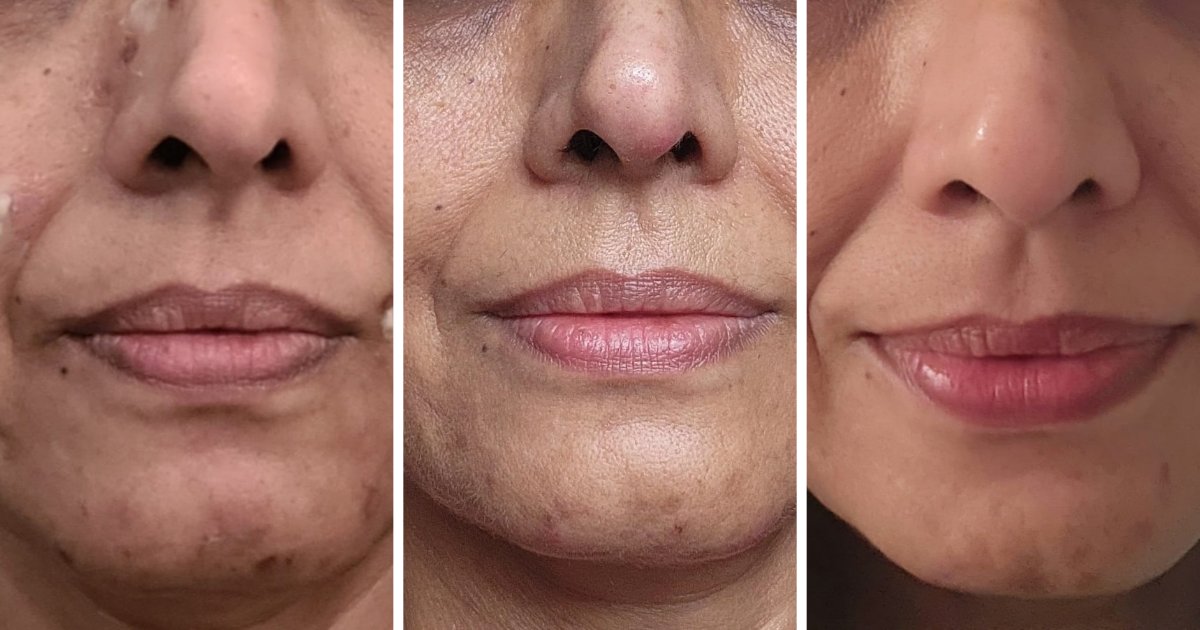
- Pause actives. Stop retinoids, chemical peels, scrubs, and exfoliating acids for at least two weeks.
- Switch to lukewarm water. Hot water strips lipids. Keep showers and cleansing brief.
- Cleanse gently, once at night. Use a non-foaming, fragrance-free cleanser. Rinse with water in the morning.
- Apply humectants to damp skin. Hyaluronic acid or glycerin draws water into the skin. This is the soak-and-seal method.
- Seal with an emollient or occlusive. Ceramides, fatty acids, and cholesterol rebuild the lipid barrier. A balm or facial oil locks in moisture.
- Protect daily. Sunscreen prevents UV damage from reopening the breach.
- Reintroduce actives slowly. One product at a time, once or twice a week, watching for stinging.
Here is the step-by-step repair process, with how long each stage lasts.
Step |
What to do |
Time or frequency |
|---|---|---|
Pause actives |
Stop retinoids, chemical peels, scrubs, exfoliating acids |
At least two weeks |
Switch to lukewarm water |
Keep showers and cleansing brief |
Daily |
Cleanse gently |
Non-foaming, fragrance-free cleanser; rinse with water in morning |
Once at night |
Apply humectants |
Hyaluronic acid or glycerin to damp skin |
Daily |
Seal with emollient or occlusive |
Ceramides, fatty acids, cholesterol; balm or facial oil |
Daily |
Protect daily |
Sunscreen prevents UV damage |
Daily |
Reintroduce actives slowly |
One product at a time, watch for stinging |
Once or twice a week |
Choosing a Barrier Repair Cream for Sensitive, Mature Skin
A suitable barrier repair cream for mature skin is typically free of fragrance and drying alcohol, and it helps to look for ingredients such as ceramides and humectants that support the skin's lipid barrier. For a restorative option, see Radiant Soothe Jelly Melt, a deep, nourishing jelly melt for mature, excessively dry, and sensitive skin.
Read labels for these barrier-supporting ingredients:
- Ceramides and cholesterol to restore the lipid barrier
- Fatty acids such as shea butter and plant oils
- Hyaluronic acid and glycerin for skin hydration
- Niacinamide to calm redness and support skin integrity
Skip fragrance, essential oils in high concentrations, and anything labeled "exfoliating" while you recover. Our nourishing facial oil serum for menopausal skin is formulated with plum oil, ximenia oil and Dong Quai herb to support dry, sensitive and itchy skin.
MENOSOOTHE - Age Rescue Elixir →

A Simple Skincare Routine for Damaged Skin Barrier Recovery
A skincare routine for damaged skin barrier recovery should be short. Three steps, morning and night, beats a ten-product regimen while skin heals. Fewer products mean fewer chances to trigger inflammation.
Here is the routine we recommend:
- Morning: rinse with lukewarm water, apply hydrating toner or serum to damp skin, seal with moisturizer, finish with sunscreen
- Evening: cleanse with a gentle oil-to-milk cleanser, apply a barrier serum or facial oil, seal with a cream or balm
- Weekly: skip exfoliation entirely until stinging stops, then add one gentle treatment
Our gentle oil-to-milk cleanser removes makeup while keeping skin hydrated and nourished.

What Else Affects Skin Barrier Repair?
Dry indoor heating, wind, and hard water can all pull moisture from skin.
If your barrier is not improving after four weeks of gentle care, check for these common mistakes:
- Still using a foaming or scented cleanser
- Applying actives "just once" to test, which restarts irritation
- Over-moisturizing without sealing, so water evaporates anyway
- Rubbing skin dry with a rough towel instead of patting
When to See a Dermatologist
Persistent redness, swelling, or cracking that does not improve with gentle care needs professional attention. A dermatologist can help rule out other conditions that can mimic barrier damage.
Your skin can recover, but it needs patience and the right support rather than more products. At MOOIE'Z ET PURE®, our collection is designed for mature, sensitive skin that needs nourishment. Our multi-functional formulas support a minimalist routine, and the brand owner's Face Yoga practice offers a holistic approach to wellness. Start with one gentle cleanser and one barrier oil, and give your skin two weeks to respond. Shop the collection and begin your repair.
Frequently Asked Questions
How long does it take to repair the skin barrier on the face?
Many people notice less stinging and tightness within a few weeks of gentle care, and full recovery can take longer. Give any routine several weeks before judging results. During that time, skip exfoliating acids, retinoids, and hot water, and keep cleansing brief with lukewarm water.
What ingredients should I avoid when my skin barrier is damaged?
Pause strong actives until your skin settles: over-exfoliation with AHAs, BHAs, and retinoids is a common cause of barrier damage. Also avoid products with high concentrations of fragrance or drying alcohols, which can worsen redness, flaking, and stinging. Instead, look for fragrance-free formulas built around ceramides, fatty acids, cholesterol, and humectants like hyaluronic acid that support skin hydration and reduce transepidermal water loss.
Can hormonal changes during menopause affect skin barrier health?
Yes. Falling estrogen during perimenopause and menopause reduces oil production and collagen, which thins the skin and weakens the lipid barrier, so transepidermal water loss rises and skin feels dry, tight, and reactive. That is why midlife skin often needs richer, barrier-supporting products such as a nourishing facial oil or a gentle oil-to-milk cleanser rather than the foaming cleansers that worked at 30.
