

Best Hydrating Toner for Mature Skin: A Midlife Guide
Manjeet KaurLast Updated: November 4, 2026
Quick Summary
A hydrating toner is a lightweight, water-based formula applied after cleansing to replenish moisture, soothe irritation, and prepare skin to absorb the products that follow. For mature skin, choose a humectant-led, alcohol-free and fragrance-free toner that supports the moisture barrier. Our top pick is MENOTONE Aqua Glow Toner, designed for menopausal dryness.
- Declining estrogen reduces oil production and weakens the skin barrier, leaving skin tight and flaky.
- Look for glycerin or Aloe Vera juice within the first five ingredients after water.
- Rosewater is commonly used for deep hydration barrier support and tone.
- Apply hydrating toner first on damp skin, then actives, then moisturizer or oil.
- Never layer a strong acid toner and a retinoid on the same night; alternate them.
Table of Contents
- Why Menopause Causes Dry Skin and What a Hydrating Toner Can Do
- How We Evaluated: Criteria for the Best Hydrating Toner for Mature Skin
- Quick Comparison: Hydrating Toners and nourishing elixir for Mature Skin
- 1. MENOTONE Aqua Glow Toner: Best Overall for Menopausal Dryness
- 2. VITAMIN C Brightening & Hydrating Toner: Best for Dullness and Uneven Tone
- 3. MENOSOOTHE Age Rescue Elixir: Best for Very Dry, Sensitive Skin
- Best Hydrating Toner for Mature Skin Drugstore: What to Look For
- Best positive Aging Toner for 40s: Choosing by Decade and Concern
- Layering Toners with Retinoids and Actives: Safety and Order
- Build Your Minimalist Hydrating Toner Routine
- Frequently Asked Questions
Why Menopause Causes Dry Skin and What a Hydrating Toner Can Do
A hydrating toner is a lightweight, water-based formula applied after cleansing to replenish moisture, soothe irritation, and prepare skin to absorb the products that follow. For women in midlife, that step matters more than it did at 30. Declining estrogen reduces oil production and weakens the skin barrier, which is why so many women in their forties and fifties describe their skin as suddenly tight, flaky, and reactive.
MOOIE'Z ET PURE® offers a curated collection of natural skincare designed for women navigating perimenopause and menopause. Declining estrogen is associated with changes in collagen and sebum levels, and skin can lose water more quickly as those levels shift. The result is dehydrated skin that looks dull and feels uncomfortable even when you moisturize. Hydrating toners are typically formulated with humectants such as glycerin or hyaluronic acid to support moisture in dry skin.
NIH overview of menopause and skin changes
How We Evaluated: Criteria for the Best Hydrating Toner for Mature Skin
We judged every toner on five criteria: ingredient quality, hydration without heaviness, barrier support, sensitivity risk, and how well it layers under other products.
Here is what matters most when evaluating a toner:
- Humectants first: glycerin, Propanediol, and honey draw water into the skin
- Barrier support: ceramides and niacinamide help repair a weakened moisture barrier
- Alcohol-free and fragrance-free: both reduce the sting that sensitive skin reports
- pH balance: a toner close to skin's natural acidity keeps the barrier calm
- Layering behavior: the formula must absorb cleanly before serums and oils
The best hydrating toner for mature skin earns its place by doing all five without drama.
Quick Comparison: Hydrating Toners and nourishing elixir for Mature Skin
Product |
Price |
Best For |
Standout Quality |
|---|---|---|---|
MENOTONE Aqua Glow Toner |
$40.00 |
Overall menopausal dryness |
Botanical hydration and prep |
VITAMIN C Brightening & Hydrating Toner |
$32.00 |
Dullness and uneven tone |
Antioxidant Vitamin C mist |
MENOSOOTHE Age Rescue Elixir |
$95.00 |
Very dry, sensitive skin |
Plum and Ximenia oil serum |
1. MENOTONE Aqua Glow Toner: Best Overall for Menopausal Dryness
Our top pick is MENOTONE Aqua Glow Toner because it is designed for mature, perimenopausal, and menopausal skin. The lightweight botanical toner replenishes hydration, soothes delicate skin, and preps the face to absorb everything layered on top.
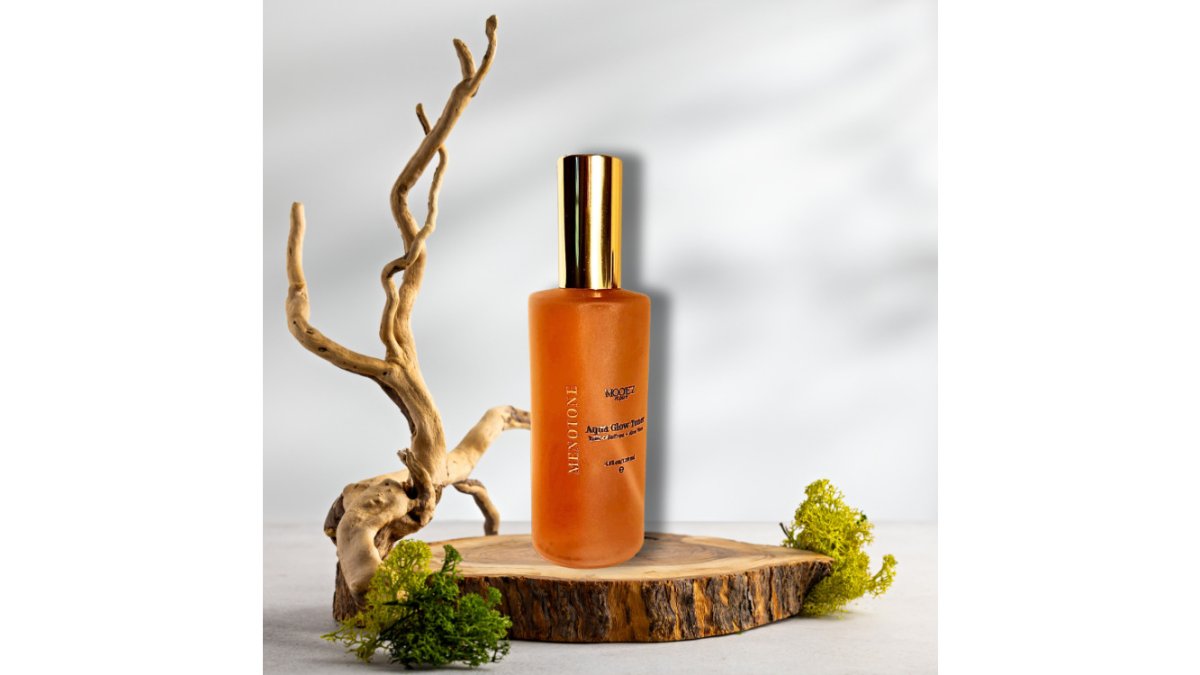
What most guides miss is that a toner applied to damp skin does more for dehydrated skin than a rich cream applied to dry skin. MENOTONE fits that logic. Pat it in, then follow with your serum or moisturizer while the skin is still slightly damp. You can shop the MENOTONE Aqua Glow Toner to see the full formula.

Best for: menopausal dryness, tightness, and dullness. Skip if: you want an exfoliating toner; this one hydrates rather than resurfaces.
2. VITAMIN C Brightening & Hydrating Toner: Best for Dullness and Uneven Tone
If your main complaint is a dull, tired look rather than tightness, reach for the VITAMIN C Brightening & Hydrating Toner. This lightweight facial mist pairs naturally derived botanical extracts with antioxidant-rich Vitamin C to refresh, hydrate, and illuminate.
Dullness is sometimes associated with hydration and antioxidant factors rather than texture alone. You can view the Vitamin C Brightening & Hydrating Toner for the full ingredient story.

Best for: dullness, uneven tone, and a quick midday refresh. Skip if: your skin is actively irritated; calm the barrier first.
3. MENOSOOTHE Age Rescue Elixir: Best for Very Dry, Sensitive Skin
MENOSOOTHE Age Rescue Elixir is not a toner in the traditional sense, and that is the point. This deeply nourishing facial oil serum uses exotic Plum Oil, Ximenia Oil, and infused Dong Quai herb and is designed for menopausal and perimenopausal skin. The non-greasy formula targets dry, sensitive, and itchy skin while addressing sagging, fine lines, and age spots.
For skin that stings at the slightest touch, an oil serum layered over a hydrating toner is a gentler path than piling on actives. The elixir is described as delivering intense hydration and nourishment. You can explore the MENOSOOTHE Age Rescue Elixir to read the full details.

Best for: very dry, reactive, itchy skin. Skip if: you prefer a water-light texture with no oil at all.
Best Hydrating Toner for Mature Skin Drugstore: What to Look For
A drugstore hydrating toner can absolutely work for mature skin, but the category rewards label literacy more than price. The goal is a short, humectant-led formula that supports a weakened barrier without adding irritation risk. Instead of scanning for marketing claims, use a concern-based decision framework: identify whether your primary issue is dehydration (tightness, dullness that improves after moisturizer), dryness (flaking, rough patches), redness (stinging, visible capillaries), or dullness (uneven tone, slow turnover). Each points to a different formula profile.
Dehydration: Look for glycerin or Aloe Vera juice near the top of the ingredient list, ideally within the first five ingredients after water. Glycerin is the most reliable humectant in mass-market formulas and is well tolerated by most skin types. Hyaluronic acid at low percentages (often 0.1-1%) adds lightweight water-binding without heaviness. A formula that leads with water and glycerin and contains no drying alcohol is usually a safe starting point.
Dryness: Prioritize barrier lipids alongside humectants. Ceramides (often listed as ceramide NP, AP, or EOP), niacinamide, and panthenol help reinforce the moisture barrier. Niacinamide is commonly used at 2-5% in leave-on products; below roughly 2% it is unlikely to do much for barrier support, and above 5% some sensitive skin types report flushing. If the label lists niacinamide but you cannot tell the concentration, treat it as a supporting ingredient rather than the main event. Try MENOFRESH - Refreshing Mist containing niacinamide along with Cucumber water and Kiwi extract.
Redness and sensitivity: Fragrance-free and essential-oil-free formulas are the safest bet. Watch for "fragrance," "parfum," and botanical oils high in the list, which can trigger stinging on a compromised barrier. Denatured alcohol (listed as alcohol denat., SD alcohol, or isopropyl alcohol) high in the list undercuts hydration and is best avoided. A pH close to skin's natural acidity, roughly 4.5 to 5.5, keeps the barrier calm; very low-pH exfoliating toners belong in a different category and should not be your first pick if your skin is reactive.
Dullness and uneven tone: A gentle brightening toner with vitamin C (often listed as ascorbic acid, sodium ascorbyl phosphate, or magnesium ascorbyl phosphate) or a mild acid such as mandelic or lactic acid can help, but concentration and pH matter. Vitamin C is formulation-sensitive; derivatives are gentler but less studied than L-ascorbic acid. If you are new to acids, start with a low-strength formula used two to three nights a week rather than a daily exfoliating toner.
Three label checks before you buy:
- Humectant position: glycerin or hyaluronic acid should appear early, not after preservatives
- Irritation risk: fragrance-free and drying-alcohol-free formulas are the safer choice for reactive skin
- Active concentration: if a hero ingredient is listed but you cannot gauge its strength, assume it is supporting, not treating
Watch out: a toner can list niacinamide, ceramides, or vitamin C and still contain too little to matter, so treat the ingredient list as a starting point and patch test on your inner forearm for two to three days before applying to your face.
If you are using a prescription retinoid, keep the drugstore toner simple, humectants and barrier support, no acids, and layer it first on damp skin to buffer irritation. For readers who want a concern-by-concern walkthrough rather than a single "best for mature skin" pick, this framework is the most reliable way to narrow the shelf.
Best positive Aging Toner for 40s: Choosing by Decade and Concern
Decade labels are a rough guide at best. What actually changes between your forties and fifties is the balance between oil production, barrier strength, and cell turnover, and a toner should be chosen by concern rather than birthday. In your forties, early perimenopause often brings the first measurable dips in skin elasticity and the first fine lines, while oil production may still be sufficient. By your fifties, barrier weakness and dryness usually dominate, and aggressive exfoliation becomes counterproductive.
A practical way to choose by concern:
- Dullness and uneven tone: a vitamin C toner or a mild brightening acid such as mandelic or lactic acid, used two to three nights a week to start. Mandelic acid has a larger molecule and tends to be gentler than glycolic acid, which makes it a reasonable first acid for mature skin.
- Tightness and flaking: glycerin and hyaluronic acid, no drying alcohol, and ideally ceramides or panthenol for barrier support. This is the profile to prioritize if your skin feels tight after cleansing.
- Redness and stinging: fragrance-free, ceramide-rich, minimal actives. Skip acids and vitamin C until the barrier is calm.
- Fine lines and texture: gentle exfoliation two to three nights a week, alternated with retinoid nights rather than layered on the same night.
Ingredient evidence is worth understanding before you spend. Glycerin and hyaluronic acid have strong support as humectants, though hyaluronic acid's benefit depends on molecular weight and formulation, lower-molecular-weight versions penetrate more but can occasionally sting sensitive skin. Niacinamide has useful evidence for barrier support and tone at roughly 2-5%. Ceramides are well established for barrier repair. Exfoliating acids (glycolic, lactic, mandelic) have good evidence for texture and tone, but concentration and pH determine both efficacy and irritation risk; a well-formulated 5% lactic acid at a higher pH is gentler than a 10% glycolic at low pH. Vitamin C has evidence for brightening and antioxidant support, but L-ascorbic acid is unstable and can irritate; derivatives are gentler but less studied.
Compatibility matters as much as the ingredient itself. If you use tretinoin or a prescription retinoid, a hydrating toner applied first on damp skin can buffer irritation, but an acid toner and a retinoid on the same night is the fastest route to a compromised moisture barrier. Alternate them, and wait a minute between layers so each product absorbs. If your skin stings when you apply anything, stop the actives for a week and rebuild with hydration and barrier support.
Watch out: more actives is not better. A common pattern is adding a brightening toner, an acid toner, and a retinoid in the same week and then wondering why the skin is reactive; pick one active lane and give it four to six weeks before judging results.
For a deeper look at how hormonal shifts affect the skin, our guide on menopause and skincare explains the biology behind each change.
Layering Toners with Retinoids and Actives: Safety and Order
Order matters more than most women realize. Apply your hydrating toner first, on damp skin, then actives, then moisturizer or oil. A hydrating toner acts as a buffer under retinoids and tretinoin, which reduces the irritation that makes so many women quit before they see results. Wait a minute between layers so each product absorbs.
Watch out: applying a strong acid toner and a retinoid in the same routine, on the same night, is the fastest route to a compromised moisture barrier. Alternate them instead. If your skin stings when you apply anything, stop the actives for a week and rebuild with hydration and barrier support.
American Academy of Dermatology guidance on retinoid use
Build Your Minimalist Hydrating Toner Routine
A minimalist routine built around a hydrating toner is easier to sustain than a ten-step regimen, and consistency is what actually changes skin. Cleanse gently, apply toner to damp skin, add one treatment, then seal with moisturizer or a facial oil. That is four steps, and for most women in midlife it is enough.
Try this sequence:
- Gentle, fragrance-free cleanser
- Hydrating toner, patted in while skin is damp
- One active, rotated by night
- Moisturizer or facial oil to seal
For a full walkthrough of a routine built for this life stage, read our perimenopause and menopause skincare routine guide. It pairs well with the products above and keeps the steps realistic.
Menopausal skin does not need more products. It needs the right few, applied in the right order, with hydration as the foundation. MOOIE'Z ET PURE® formulates botanical toners and elixirs for exactly this transition, with a less-for-more approach that respects reactive, mature skin. Our MENOTONE toner replenishes moisture, our Vitamin C mist restores radiance, and our MENOSOOTHE elixir soothes the driest, most sensitive days. Start with one product, build from there, and let your skin tell you what it needs. Get started with MOOIE'Z ET PURE® and give midlife skin the hydration it has been asking for.
Frequently Asked Questions
What is the best hydrating toner for mature skin?
There is no single answer for every woman, but the best hydrating toner for mature skin is one that supports the moisture barrier without irritation. Look for glycerin, hyaluronic acid, ceramides, or niacinamide, and skip drying alcohol and added fragrance. MENOTONE Aqua Glow Toner ($40) is designed for perimenopausal and menopausal skin.
Are toners actually beneficial for mature skin?
Yes, when they are hydrating rather than astringent. Mature skin loses moisture and elasticity, so a hydrating toner adds a first layer of water-based moisture and helps the skin absorb the serums and creams that follow. Toners that contain alcohol or strong astringents can strip the skin barrier and make dryness and redness worse, so check the label before buying.
Can a hydrating toner help with menopausal skin dryness?
It can help, but it works best as part of a routine. Menopausal dryness comes from falling estrogen, which reduces oil production and barrier support. A hydrating toner replenishes surface moisture, then a facial oil serum or moisturizer seals it in.
Which toner ingredients should women over 50 look for?
Look for humectants like glycerin and hyaluronic acid, barrier-supporting ceramides, and niacinamide for tone and redness. Gentle exfoliants such as mandelic or glycolic acid can help dullness if your skin tolerates them. Avoid high alcohol content and added fragrance if you are sensitive. If you use retinoids or tretinoin, keep the toner simple and hydrating so it buffers irritation instead of adding to it.
